THE RIGHT SIDE OF THE LI(N)E
They tied ribbons so they wouldn’t forget. Choeung Ek, Cambodia
The moral paradox isn't that war makes men cruel. It's that war makes cruelty righteous.
I've traced this pattern across continents and decades. Auschwitz. KGB detention centres. The foibe of Ex-Yugoslavia. Cambodia, where I am now. And in the stories resurfacing about Sarajevo, ordinary men travelling to hillsides on weekends to shoot civilians through scopes, as if hunting were sport and human beings were game.
Every extraordinary act of violence begins with an extraordinary act of sorting. Someone draws a line and declares: on this side, humanity; on that side, something less. Once that line exists, once you've positioned yourself as the arbiter of who deserves to live and who deserves to die, the violence becomes inevitable. Not regrettable. Necessary. Not shameful. Justified.
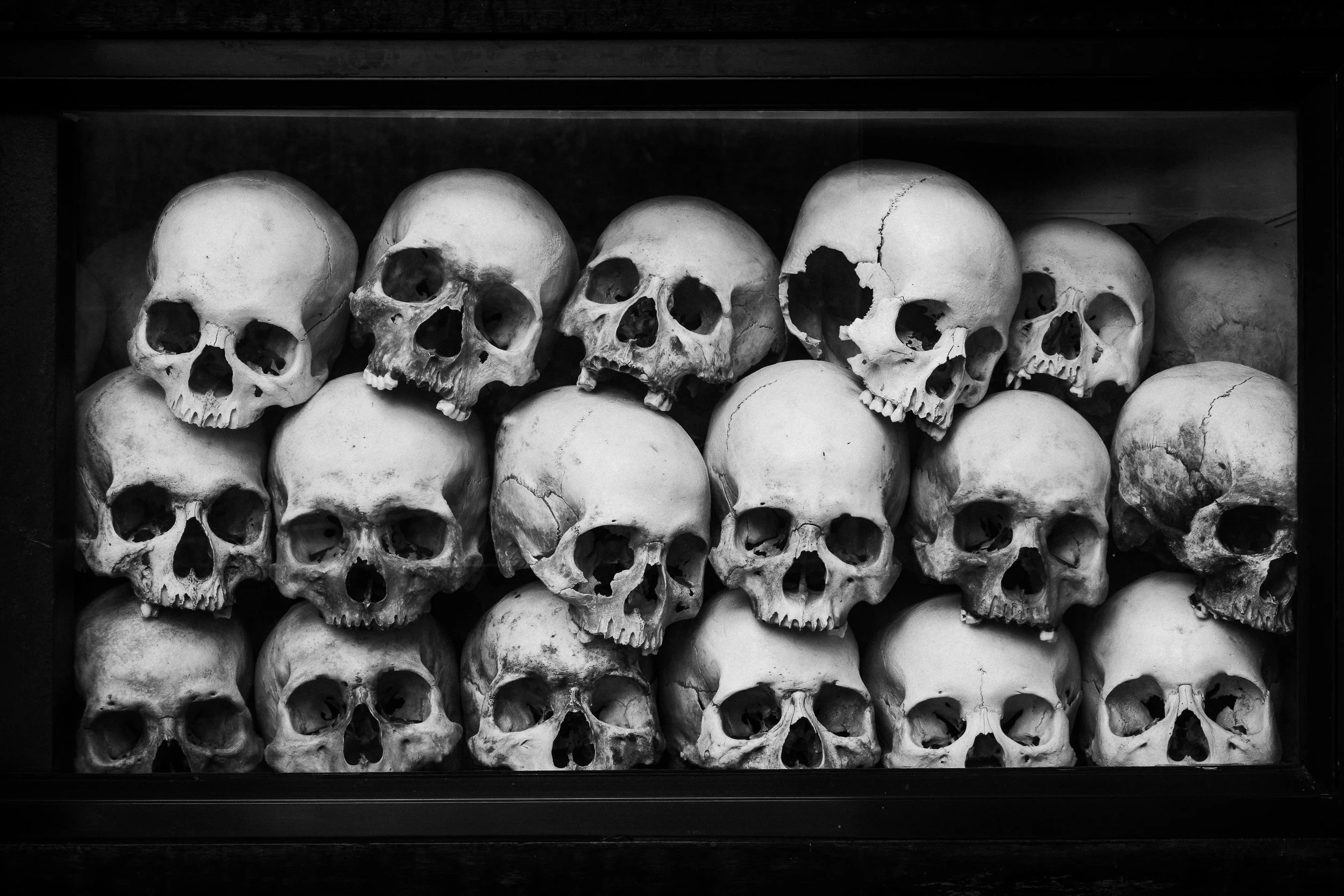
Skulls at the ‘Killing Fields’ in Cambodia
This is the mechanism I've witnessed repeated under different flags, in service of different ideologies, against different declared enemies. But always the same foundational equation: we possess moral clarity; they represent moral corruption. We are fully human; they are expendable. We are protecting civilisation; they are threatening it. We act in service of a higher good; they have forfeited their right to exist.
The SS officer believed he was purging Europe of degeneracy. The Soviet interrogator believed he was defending the revolution from saboteurs. The Ustashe throwing bodies into sinkholes believed they were cleansing their land. The Serb loading his rifle on a Sarajevo hillside believed he was protecting his people. The American bomber pilot believed he was stopping the spread of totalitarianism. The Vietnamese fighter believed he was expelling imperialism.
Each one held the rifle with clean hands or convinced himself he did.
This is what makes the violence sustainable. It's not madness. It's not even hatred, necessarily. It's certainty. The absolute conviction that your violence is different from their violence. That your cause elevates you above the moral laws binding lesser men. That the line you've drawn isn't arbitrary: it's truth.
The most insidious part: this certainty doesn't come from nowhere. It comes from systems—political, military, ideological, religious—designed to create and reinforce it. To make the soldier, the guard, the sniper, the interrogator feel not just permitted but obligated to pull the trigger. To transform murder into duty, and duty into virtue.
War doesn't introduce this logic. War just removes the last obstacles to acting on it.
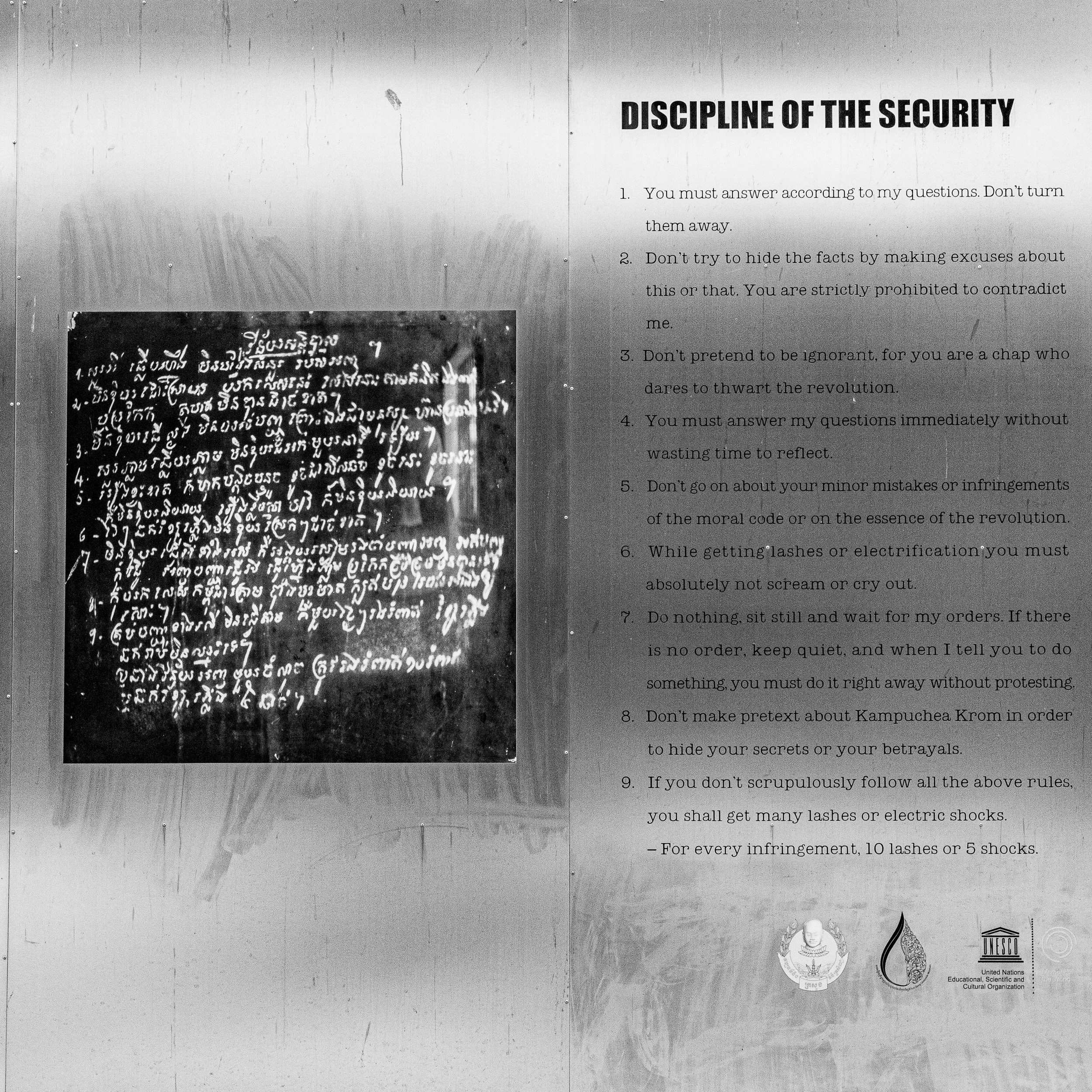
Discipline of the security guards at Tuol Sleng, Cambodia. A detail.
The weekend snipers of Sarajevo are the perfect distillation of this horror. Men who didn't need to be there. Who traveled to kill civilians as recreation. Who saw human beings through a scope and felt nothing but the satisfaction of a clean shot, not because they were uniquely monstrous, but because someone had convinced them, or they had convinced themselves, that those weren't really people in the crosshairs. Just targets. Just enemies. Just obstacles to whatever greater good justified their presence on that hillside.
This is the common thread: the casual ease with which human beings grant themselves permission to destroy other human beings, as long as they can first declare themselves morally superior.
The line gets drawn. The sorting happens. And then the violence follows. Dressed in the language of justice, necessity, duty, honor, defense.
Every single time, the perpetrators believe, truly believe, that their violence is different. That their cause justifies what would otherwise be unforgivable. That they are the exception to the rule, the righteous ones, the defenders rather than the aggressors.
This is the paradox I keep returning to: every atrocity in human history has been committed by men who believed they were doing the right thing.
The rifle doesn't discriminate. But the hand that holds it does. And that hand always, always, believes itself to be on the right side of the line.